
In the world of perfumery, there are fragrances that define an era and others that transcend generations. While some perfumes disappear just a few years after their launch, others remain on the market for decades, becoming true benchmarks for both consumers and brands.
What Makes a Fragrance Timeless?
The answer does not lie solely in the selection of high-quality ingredients or a well-balanced formula. Behind every timeless perfume is a combination of strategy, market knowledge, a strong brand identity, and technical development capable of adapting to the passage of time without losing its essence.
Many companies make the mistake of creating perfumes based only on current trends. However, trends change quickly. What dominates the market today may become obsolete in just a few years.
Brands that remain relevant understand that a fragrance should not simply respond to a trend—it should become part of their identity.
For this reason, developing a timeless perfume involves making decisions that go far beyond its scent.
It means building an experience capable of creating an emotional connection with consumers today, tomorrow, and many years from now.
In this article, you will discover the factors that turn a fragrance into a classic, why branding is just as important as formulation, and the role a specialised laboratory plays throughout the entire development process.
What Does It Really Mean for a Fragrance to Be Timeless?
When we talk about a timeless fragrance, we are not referring to an old perfume or a classic in the traditional sense.
A timeless fragrance is one that maintains its appeal regardless of prevailing trends.
It is a perfume capable of evoking the same emotions over time. Its success does not depend on a passing trend but on a well-developed identity.
These types of perfumes usually share several characteristics:
- They maintain a clearly recognisable personality.
- They are well-balanced and easy to remember.
- They appeal to different generations.
- They reinforce the brand’s identity.
- They remain relevant even as market trends change.
In other words, they are not created simply to make an impact at launch.
They are designed to endure.
The Fragrances That Last Do Not Follow Trends—They Create Their Own
The perfume industry is constantly evolving.
Every season brings new fragrance families, fashionable ingredients, and styles that dominate the market for a period of time.
In recent years, for example, clean fragrances, gourmand accords, mineral notes, and certain compositions inspired by natural ingredients have gained significant popularity.
These trends create commercial opportunities, but they also present risks.
When a brand develops a perfume solely to respond to a trend, it risks losing its appeal once that trend fades.
That is why companies seeking to build a lasting brand adopt a different perspective.
Instead of asking:
“What is currently fashionable?”
They ask:
“What does our brand represent?”
This difference completely changes the development process.
A fragrance created from a brand’s identity is far more likely to remain relevant ten years from now.
Everything Begins with a Strong Brand Identity
Before selecting a single raw material, it is essential to define the brand’s universe.
A perfume is not an isolated product. It is an extension of the company that markets it.
For this reason, the laboratory needs to understand aspects such as:
- What values does the brand represent?
- What emotions does it want to evoke?
- What is its personality?
- How does it want to be remembered?
- What type of consumer does it want to attract?
Answering these questions makes it possible to build a much more consistent creative direction.
A luxury brand, for example, will probably develop a very different olfactory language from a company targeting a younger audience or consumers looking for fresh and carefree proposals.
The goal is not to follow a specific trend.
It is to develop a fragrance that is consistent with the brand’s DNA.
The Power of Emotions Over Trends
Trends change. Emotions remain.
This principle explains why some perfumes continue to evoke the same feelings decades after their launch.
Our sense of smell has a very close relationship with memory.
A scent can instantly transport us to a place, a person, or a specific moment in our lives.
For this very reason, the most successful brands do not simply try to create a pleasant perfume. They seek to build an emotional experience.
When a fragrance becomes associated with positive memories, consumer loyalty increases significantly. And that connection is far more difficult to replace than any passing trend.
For this reason, during the development of a new fragrance, the laboratory usually works alongside the brand to define not only the olfactory profile but also the emotions the fragrance should convey.
Some brands seek to communicate:
- Elegance
- Freedom
- Sophistication
- Calm
- Energy
- Exclusivity
- Well-being
- Naturalness
These emotions serve as a guide throughout the entire creative process.
Consistency Is the Key to a Timeless Fragrance
One of the aspects that distinguishes great brands is consistency.
Every element communicates the same message.
The fragrance.
The packaging.
The communication.
The graphic design.
The purchasing experience.
Advertising campaigns.
Social media.
Everything forms part of the same identity.
When consistency exists, consumers recognise the brand much more easily and develop a stronger perception of it.
On the other hand, when every launch follows a completely different direction, building long-term recognition becomes much more difficult.
For this reason, a timeless fragrance should never be developed in isolation.
It should be integrated into an overall branding strategy in which every decision contributes to strengthening the company’s personality.
Before Creating a Perfume, You Must Understand the Market
Although a timeless fragrance does not depend on trends, that does not mean ignoring the market.
Quite the opposite.
Understanding the competitive landscape makes it possible to identify opportunities and avoid developing a perfume that is too similar to existing products.
During this stage, aspects such as the following are analysed:
- The fastest-growing market segments
- Consumer preferences
- Dominant fragrance families
- Competitors’ positioning
- Price ranges
- Distribution channels
This analysis is not intended to copy what already exists. Its purpose is to find a unique space for the brand.
Fragrances that remain successful for years usually occupy a clearly defined place in the consumer’s mind. And that differentiation begins long before the perfume is formulated.
Formulation: Where Creativity Meets Technical Expertise
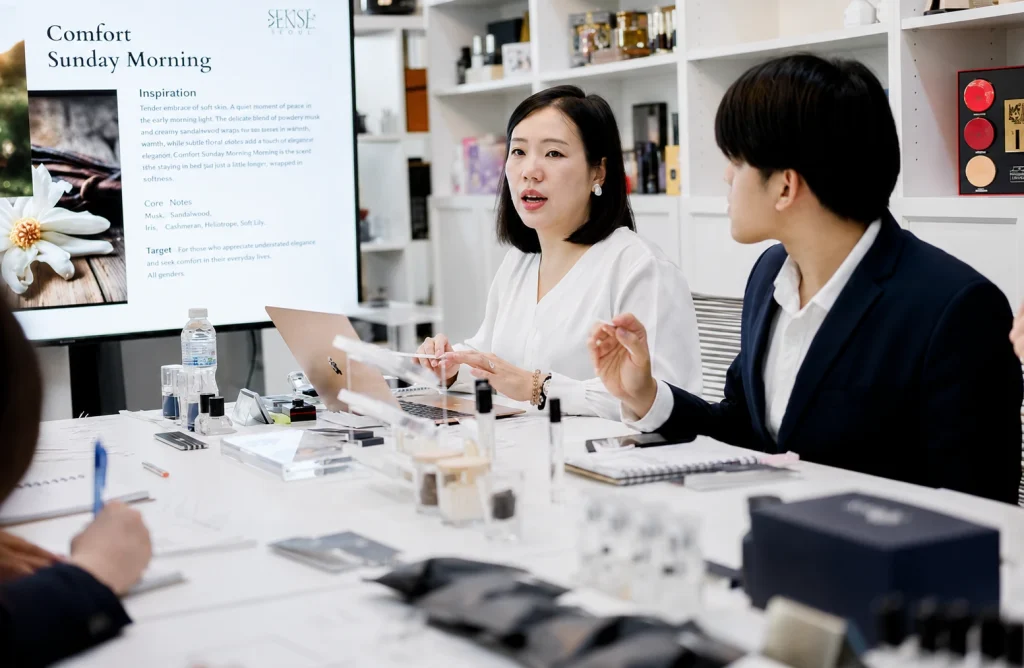
Once the brand identity has been defined and the market the perfume is intended for has been fully understood, one of the most important stages of the project begins: formulation.
This is where ideas are transformed into a real fragrance.
Although, from the outside, it may seem like a purely creative process, developing a timeless perfume requires finding the perfect balance between creativity, technical expertise, and production feasibility.
The goal is not simply to create a fragrance that makes an impression during the first few minutes after application.
The real challenge is to develop a perfume that preserves its personality as the hours pass and continues to appeal to consumers even as market trends evolve.
For this reason, every decision made during formulation has a direct impact on the product’s future success.
Olfactory Balance Is More Important Than Intensity
One of the most common mistakes when developing a new fragrance is trying to make it stand out solely through its intensity.
However, a memorable perfume is not necessarily the strongest one.
It is the one that maintains balance across all of its notes.
Timeless fragrances usually feature a harmonious structure in which every stage serves a specific purpose.
- Top notes create the first impression.
- Heart notes define the personality of the perfume.
- Base notes provide depth, character, and longevity.
When these three stages are well integrated, consumers perceive a natural and pleasant evolution.
The perfume does not lose its identity as the hours go by. Instead, it reveals different nuances while remaining instantly recognisable.
That balance is one of the defining characteristics of a fragrance developed with a long-term vision.
The Quality of Raw Materials Makes the Difference
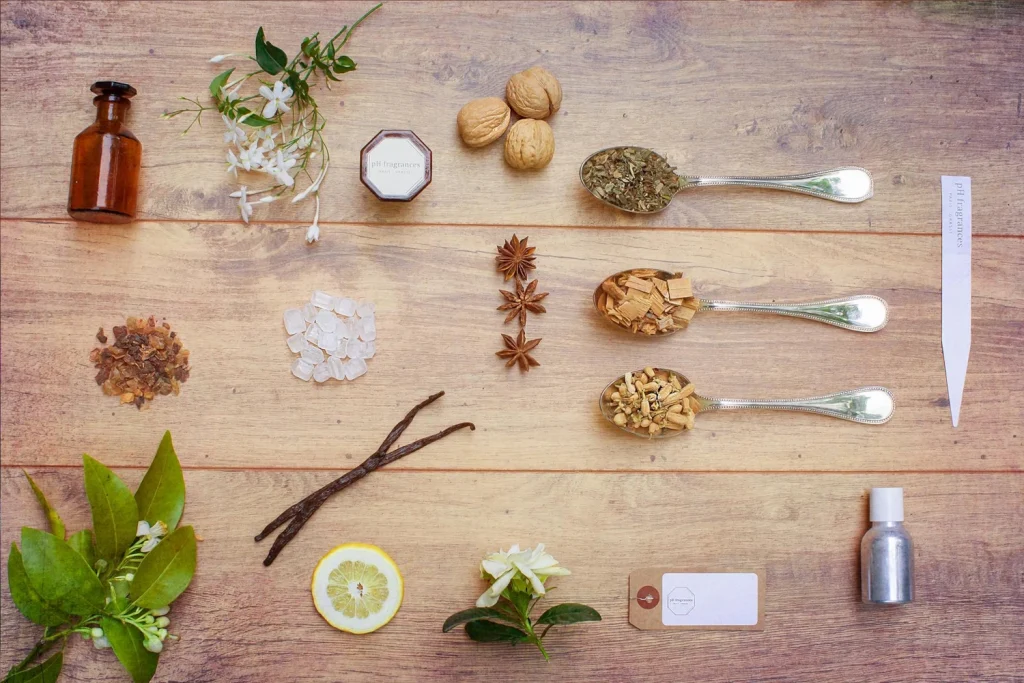
A fragrance can only remain consistent over time if it is built on high-quality ingredients.
Raw materials influence many aspects of a perfume:
- Its stability
- The evolution of the scent
- Its longevity on the skin
- The sensory perception
- The ability to reproduce the same formula consistently during production
However, choosing high-quality ingredients does not simply mean selecting the rarest or most exclusive raw materials. It also means choosing components that guarantee a stable supply and allow the fragrance to maintain the same olfactory identity as the brand grows.
When a perfume begins to be produced on a larger scale, it is essential that the laboratory can reproduce exactly the same formulation.
Consistency is one of the foundations of a timeless fragrance.
Planning Production from Day One
Many companies develop a fragrance focusing only on its launch.
However, a brand with a long-term vision needs to ask a different question:
Will we be able to manufacture this same perfume five or ten years from now while maintaining exactly the same quality?
The answer depends largely on how production has been planned from the very beginning.
During this stage, the laboratory evaluates aspects such as:
- Ingredient availability
- Formula stability
- Process repeatability
- Manufacturing scalability
- Required quality controls
Planning these elements from the start prevents the need to modify the formulation when demand increases or market conditions change.
For a brand, maintaining consistency between the first production batches and those manufactured years later is essential for preserving consumer trust.
A Fragrance Should Be Able to Grow Alongside the Brand
The most successful perfumes are not designed only to meet today’s needs. They must also be prepared to accompany the company’s future growth.
It is common for a brand to begin by marketing a single fragrance and later expand its catalogue with new collections, limited editions, or complementary products.
When the original fragrance has been developed with a strategic vision, building a coherent olfactory family becomes much easier.
This makes it possible to:
- Maintain a recognisable identity
- Facilitate future line extensions
- Strengthen brand positioning
- Create a consistent customer experience
In other words, a timeless perfume should not only succeed today.
It should become the foundation upon which the brand continues to grow.
Sustainability Also Contributes to a Fragrance’s Longevity
The way consumers perceive perfumery is changing.
There is increasing concern about aspects such as the origin of ingredients, the efficiency of manufacturing processes, and the environmental impact of packaging.
For this reason, developing a fragrance with a long-term vision also means incorporating sustainability criteria whenever possible.
This is not simply about responding to market demand. It is also about building a brand prepared to evolve in an environment where transparency and responsibility will continue to gain importance.
Aspects such as:
- Responsibly sourced raw materials
- Optimised manufacturing processes
- Recyclable packaging
- Waste reduction during production
All contribute to strengthening the brand’s positioning and building a stronger long-term image.
Packaging Must Also Stand the Test of Time
When we think about a timeless fragrance, we usually focus exclusively on its scent.
However, packaging design has a tremendous influence on consumer perception.
Packaging that is too closely tied to a particular trend can make a product look outdated long before the fragrance itself.
Brands that remain relevant for decades usually choose designs that are balanced, elegant, and instantly recognisable.
This does not mean abandoning innovation. It means avoiding elements that may quickly lose their relevance.
The objective is for both the perfume and its visual identity to convey the same feeling of quality and consistency, regardless of when consumers discover them.
The Consumer Experience Does Not End at Purchase
An unforgettable fragrance continues to accompany the consumer long after the purchase has been made.
Every interaction with the brand reinforces that experience:
- The first contact with the packaging
- Opening the box
- Applying the perfume
- The evolution of the fragrance throughout the day
- The memory it leaves over time
Brands that understand this journey build much deeper relationships with their customers. And that emotional connection is precisely one of the elements that best withstands changing trends.
The Mistakes That Can Cause a Fragrance to Lose Relevance Over Time
Creating a perfume that remains relevant for years requires a strategic vision. Many brands start with an excellent idea, but certain mistakes made during development can limit its long-term success.
A fragrance may be technically flawless and still fail to become a lasting product if it is not supported by proper planning.
These are some of the most common mistakes:
1. Creating a Perfume Based Solely on a Trend
Trends are a useful tool for understanding the market, but they should never become the only starting point.
A brand that develops a fragrance based exclusively on what is currently popular may achieve a successful launch, but it also risks losing relevance when consumer preferences change.
A timeless perfume must strike the right balance between being contemporary and enduring.
It should feel modern without relying on elements that may quickly become outdated.
The key is to build a distinctive identity.
The world’s leading perfume brands are not remembered because they followed a particular trend.
They are remembered because they created a recognisable universe around their fragrance.
2. Trying to Appeal to Everyone
Another common mistake is trying to create a fragrance so generic that it appeals to the widest possible audience.
Although this may seem like a safe strategy, it often causes the perfume to lose its personality.
Fragrances that remain successful over time usually have one thing in common:
A clear identity.
They have character.
They communicate a specific emotion.
They represent a particular way of seeing the world.
A fragrance should connect with a specific audience rather than trying to satisfy every consumer at the same time. Differentiation is one of the factors that contributes most to building a memorable brand.
3. Failing to Clearly Define Brand Positioning
Before creating a fragrance, it is essential to understand the place it will occupy in the market.
Developing a perfume is very different depending on whether it is:
- Luxury
- Premium
- Artisan
- Commercial
- Niche
- Designed for a younger audience
- Sustainability-focused
Each positioning requires a different strategy.
The price, packaging, communication, distribution, and even the olfactory composition must all be aligned. When these elements are disconnected, consumers perceive a lack of consistency.
A timeless fragrance is always born from a comprehensive vision.
4. Focusing Only on the Launch Instead of the Future
Launching a perfume is only the beginning of its life.
A brand must think beyond its first marketing campaign.
Questions such as these are essential:
- Will the fragrance be able to remain in production for years?
- Will it maintain the same quality?
- Can it become part of a larger collection?
- Will it continue to represent the brand in the future?
A long-term vision leads to better decisions throughout every stage of the project.
The Laboratory’s Role in Creating a Fragrance That Endures
Developing a timeless perfume requires a combination of creativity, technical expertise, and strategic thinking.
For this reason, working with a specialised laboratory is one of the most important decisions any brand can make when creating its own fragrance.
A laboratory does much more than transform an idea into a formula. It also helps turn a brand concept into a viable product that is ready to compete successfully in the marketplace.
Throughout the development process, a specialised team can support the company in areas such as:
- Defining the olfactory concept
- Selecting raw materials
- Creating fragrance samples
- Refining the formulation
- Stability testing
- Production preparation
- Project scalability
- Quality control
This comprehensive approach ensures that the fragrance is not only creatively attractive but also commercially sustainable.
The Importance of Building a Distinctive Olfactory Identity
In a market where thousands of new perfumes are launched every year, differentiation has become essential.
A fragrance may be technically excellent, but if it lacks a recognisable identity, it will be far more difficult for consumers to remember it.
An olfactory identity functions as the brand’s invisible signature. It is what enables people to associate certain scents with a particular company.
Building this identity requires time, consistency, and a deep understanding of the values the brand represents.
It is not simply about creating a pleasant scent. It is about creating an experience that consumers can recognise and remember.
A Timeless Fragrance Is a Brand Investment
Many companies see a perfume as just another product within their catalogue.
However, a well-developed fragrance can become one of a brand’s most valuable assets.
A perfume with a distinctive personality can:
- Increase brand recognition
- Create emotional connections with consumers
- Build customer loyalty
- Open new commercial opportunities
- Facilitate international expansion
For this reason, fragrance development should be viewed as a strategic investment rather than simply a one-off product launch.
Brands that create memorable perfumes do not merely sell a scent.
They sell a story, an emotion, and an experience.
Conclusion: Creating a Fragrance That Endures Requires Vision, Strategy, and Expertise
A timeless fragrance does not happen by chance. It is the result of a process in which every decision matters—from defining the brand concept to selecting raw materials, formulation, production, and launch strategy.
The perfumes that remain successful for years are not necessarily the boldest or the ones that follow every new trend.
They are the fragrances capable of expressing a clear identity and creating an emotional connection with consumers.
Creating your own fragrance involves much more than developing a formula.
It means building an element capable of representing a brand for years and becoming part of its story.
At MS PARFUM, we support brands throughout the entire fragrance development process, combining technical expertise, innovation, and strategic vision to create bespoke perfumes that truly reflect the identity of every project.
Because a great fragrance should not only be appreciated today. It should continue to make sense tomorrow.