
Perfume as a key strategic product for any brand.
Considered a product with tremendous symbolic power, perfume stands out in the current branding landscape. Within the modern cosmetics and perfumery industry, a fragrance is not simply an item to sell; rather, it functions as a sensory expression embodying the identity of the brand. In this way, perfume precisely becomes a medium of emotional communication; it connects the company with the customer through a prolonged olfactory experience filled with associations. From a strategic perspective, perfume transforms the intangible values of the brand into a tangible experience, fostering audience loyalty and strengthening the company’s position in the market.
In this context, fragrance creation is emerging as a vital focus for companies in the cosmetics and wellness sector. Developing their own range of perfumes requires meticulous knowledge, both of formulation and manufacturing procedures as well as the cost structure involved in perfume production. Understanding the distribution of costs in production enables companies to make well-grounded strategic decisions and design products that are competitive in quality and positioning.
In recent decades, the global fragrance market has shown continuous expansion, driven by the growing demand for customized products and the rise of private brands. This phenomenon has reinforced the importance of perfume manufacturing models for brands and private label perfumery services. In fact, more companies are attempting to develop exclusive fragrances that reflect their corporate identity and allow them to diversify their offerings.
Within this panorama, the work of laboratories specialized in perfume manufacturing gains great relevance. Companies such as MS|CLINICS actively participate in the evolution of the sector, promoting a scientific and structured vision of cosmetic development. A deep understanding of the cost structure underlying perfume creation is crucial. It allows companies to understand how the intrinsic value of a fragrance is built, from the initial concept to its presence in the market.
Why understanding the cost structure is essential when launching a perfume.
Frequently, the development of new fragrances suffers from a fundamental mistake: the final price of a perfume is often confused with its real manufacturing cost. The price paid by the consumer includes many variables related to marketing, distribution and positioning, whereas the real manufacturing cost focuses on its development, formulation, production and packaging.
Differentiating price from cost enables companies to build commercial strategies aligned with their brand image. A fragrance aimed at the premium segment implies very specific choices regarding raw materials, essence concentration and the final presentation. By contrast, a product intended for a broader market can optimize certain elements of the production process, seeking a subtle balance between quality and profitability.
The role of specialized laboratories in perfume creation.
In the world of modern perfumery, specialized laboratories have a fundamental importance. These are the places where technical and scientific knowledge meets creative inspiration to transform a simple concept into a marketable fragrance. Working with a laboratory specialized in fragrance development gives brands the opportunity to use advanced technology, formulation expertise and efficient production procedures while ensuring high quality standards.
In this context, the perfume manufacturing model for third parties allows companies to develop unique perfumes without the need to invest in their own production facilities. The comprehensive services offered by laboratories include perfume ideation, olfactory formulation, industrial production and packaging design. This integration optimizes the cost structure of perfume production and facilitates the entry of new products into the market.
How the perfume creation process works.
Fragrance conceptualization.
The journey of perfume creation begins with the conceptualization of the fragrance itself. This initial stage requires a clear definition of the olfactory identity that the product will present and how it aligns with the principles of the brand. It also includes the analysis of the target audience, the careful identification of market positioning and the construction of a sensory narrative that will later become the final aromatic composition.
The olfactory concept emerges as the heart of this creative process. From it arise the central olfactory families, the emotions intended to be evoked and the type of sensory experience designed for the consumer. From this perspective, the development of customized fragrances relies on a solid understanding of the complex relationship between olfactory perception, brand identity and consumer behavior.
Selection of raw materials.
The selection of raw materials is perhaps the most influential factor in the quality and final price of a fragrance. Aromatic compositions are built by combining natural ingredients with synthetic molecules, making it possible to reproduce a wide spectrum of scents and subtle sensations. Natural ingredients such as flowers, woods, resins or citrus fruits bring complexity and authenticity to the fragrance, although they may involve higher costs due to their limited availability and the extraction methods required to obtain them. In contrast, synthetic molecules expand the perfumer’s creative capabilities and provide stability in formulation. The selection of raw materials directly affects the cost structure during perfume manufacturing and determines the final character of the scent as well as its positioning in the market.
Formula design.
Formula design is the creative and scientific core of the perfumery process. At this stage, the perfumer combines different raw materials to construct the olfactory structure of the perfume. This architecture is usually organized around top notes, heart notes and base notes that evolve over time after the fragrance is applied.
The formulation process involves numerous iterations and meticulous olfactory tests in search of the perfect balance of each component. Even the smallest adjustment can alter the perception of the perfume, which requires the perfumer to possess precise technique and highly refined sensory sensitivity.
Once the formula has been refined, several rigorous tests are carried out to analyze the stability and performance of the final product. Stability tests examine how the fragrance behaves under different climatic conditions, light exposure and storage environments. These evaluations are essential to ensure that the perfume does not lose its organoleptic properties throughout its lifecycle. At the same time, tests are conducted to evaluate the perfume’s durability on the skin and its olfactory evolution over time. These validation stages are a fundamental part of perfume development and manufacturing and ensure the quality of the final product.
Evaluation, stability and validation of the perfume.
Industrial production and quality control.
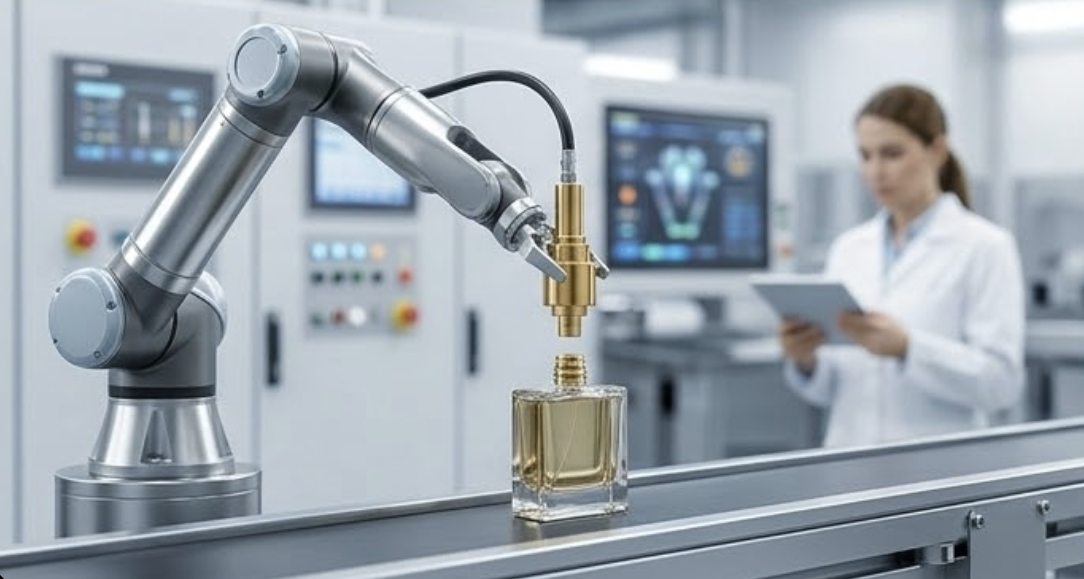
During the industrial production phase, the perfume is manufactured on a large scale for commercialization. In this process, the raw materials are mixed, the fragrance undergoes maceration and is then filtered before packaging.
Maceration integrates the aromatic components uniformly, creating a stable and balanced scent. Afterwards, the perfume is bottled in selected containers and subjected to strict quality control procedures that ensure compliance with established standards.
Main costs in perfume production.
Creation and formulation costs.
Creative development is crucial within the cost structure of perfume creation. It includes the work of the perfumer, olfactory research and the development of a customized formula unique to the brand.
Olfactory research involves analyzing market trends, exploring new aromatic combinations and experimenting with different raw materials. This creative process represents a significant investment that adds value to the final product.
Cost of raw materials.
In the cost analysis of a fragrance, raw materials play a fundamental role. The quantity of essence concentrated in the formula strongly affects the power and persistence of the perfume.
Additionally, the scarcity and origin of components can increase manufacturing costs. Some natural extracts require large quantities of plant material to produce very small amounts of essence, which influences their value in the market.
Laboratory and manufacturing costs.
Laboratory-related expenses include the technical processes required to transform the formula into a commercial product. These include component mixing, maceration, filtration and quality control. The use of specialized technical equipment and strict quality protocols forms part of the necessary conditions to guarantee product safety and effectiveness.
Regulatory and certification costs.
Perfume manufacturing within the European environment must comply with a set of regulations that ensure consumer safety. These regulations require the preparation of highly detailed technical documentation including safety evaluations, ingredient analysis and the necessary regulatory registrations. Compliance with these standards is an essential component of the cost structure involved in perfume manufacturing and ensures that the product can be legally sold in different markets.
Packaging costs.
Packaging plays a very important role in the perception of perfume value. The design of the bottle, the type of atomizer, the cap and the external box influence the aesthetic experience of the customer and the positioning of the product. The choice of materials, the complexity of the design and the level of packaging customization can produce significant differences in production costs.
Logistics costs and minimum production.
Logistics and production planning are important aspects of the economic structure of a fragrance. Laboratories often establish a minimum production quantity in order to optimize industrial processes and reduce unit costs. Storage, transportation and distribution of the product represent essential logistical elements that must be included in the overall cost evaluation. Factors that influence the final cost of a perfume.
Type of perfume and concentration.
The type of perfume determines the proportion of aromatic essence used in the formula. Fragrances with higher concentration, such as perfume extract, show greater intensity and longevity, but they also involve higher costs because they require larger quantities of raw materials.
Exclusivity of the formula.
The uniqueness of a formula represents a distinctive factor in perfumery. Fragrances created exclusively for a brand may include exclusivity agreements that prevent their use by other companies.
Manufacturing volume.
Production volume directly influences the economic profitability of the manufacturing process. A larger production scale generally reduces unit costs through resource optimization and economies of scale.
Customization and its impact.
Customization in a product naturally affects the final price. Brands seeking unique designs or custom components may increase the perceived value of the product, although this also raises manufacturing costs.
Strategic positioning of fragrances.
The position a perfume occupies in the market determines many decisions in its development. Niche perfumery tends to prioritize exclusive ingredients and complex formulas, while mass-market products focus on cost optimization.
Optimizing costs without compromising quality.
Choosing the right laboratory.
Selecting a specialized laboratory is crucial for any brand wishing to develop its own fragrance. Technical expertise, innovation and production infrastructure directly influence development efficiency.
Product concept as a fundamental pillar.
A clear concept from the beginning prevents changes that increase development costs. A well-defined concept facilitates the selection of ingredients and the creation of a consistent formula aligned with the brand’s objectives.
Balancing creativity and economic viability.
Perfumery represents a complex interplay between art and science. The challenge lies in harmonizing the imagination of the perfumer with the financial feasibility of the project. Proper selection of raw materials makes it possible to maintain high quality standards without compromising the economic sustainability of the product.
Optimizing packaging and production.
Efficient packaging design and proper production planning contribute significantly to optimizing the cost structure of fragrance development. The implementation of adaptable solutions allows the project to scale while ensuring product competitiveness in the commercial landscape.
The value of collaborating with a specialized perfumery laboratory.
Complete project development.
Creating a fragrance for the market requires a complex process that combines science, olfactory creativity and industrial engineering. Today, within the cosmetics and perfumery sector, collaboration with an expert laboratory is essential to guarantee the quality and continuity of a project. The involvement of specialized centers makes it possible to transform an initial idea into a strong and marketable product capable of competing in a sophisticated global market. In this context, the contribution of organizations such as MS|CLINICS becomes strategically valuable in perfume development processes and perfume manufacturing for brands.
The complete development of a perfume involves coordinating numerous stages, from the initial idea to industrial production and the preparation of the product for sale. Effective management of these stages is fundamental in the cost structure of fragrance production and allows resource optimization without compromising final product quality. A specialized laboratory provides the technical infrastructure and multidisciplinary team capable of managing each of these phases using scientific rigor and creative sensitivity.
Within the context of perfume production, the concept of comprehensive development refers to the ability to integrate within the same professional environment all the stages necessary to create a perfume. This approach allows the processes of olfactory research, formulation, manufacturing and packaging to be coordinated harmoniously, producing an efficient workflow that benefits the conceptual coherence of the final product. The participation of MS|CLINICS in such processes provides brands with access to customized perfume development services adapted to the specific needs of each project.
The conceptualization of the perfume represents the starting point of the integrated development of the project. At this foundational stage the central olfactory concept is defined, which will guide the creation of the perfume and determine its position in the market.
This process requires a careful analysis of the brand identity, the intended audience and the trends shaping the evolving world of perfumery. Building a strong concept lays the foundation for the subsequent formulation of the fragrance and ensures coherence in the product narrative.
Following the definition of the concept, the olfactory formulation stage begins, representing the scientific and creative core of perfume development. At this stage, the perfumer carefully selects and blends different raw materials to construct a harmonious aromatic architecture. Formulation requires deep knowledge of fragrance chemistry along with the sensory properties of each component. In the context of perfume manufacturing for brands, developing a distinctive formula provides a clear competitive advantage by strengthening the product’s identity in the market.
The formulation process, often complex, involves multiple tests and careful adjustments aimed at refining the olfactory composition. With each iteration, the fragrance’s performance is evaluated in detail, observing its evolution on the skin as well as its consistency with the initial concept. The technical expertise of the laboratory becomes indispensable in optimizing these experimental phases and ensuring that the final formula meets strict quality standards. The participation of MS|CLINICS in this process facilitates the integration of scientific and strategic criteria during the creation of new fragrances.
Once the formula has been validated, the industrial production stage begins, meaning the manufacture of the perfume in quantities suitable for commercialization. This process includes the blending of components, the maceration of the fragrance and its subsequent filtration before final packaging. Maceration is a fundamental stage in perfume manufacturing that promotes the harmonious integration of the different aromatic notes, creating a balanced and long-lasting fragrance.
Quality control and regulation are essential.
Quality represents a fundamental pillar in fragrance production, especially within the European market. Consumers currently expect products that provide a refined sensory experience while also complying with strict safety and traceability standards. In this context, quality control becomes essential in perfume manufacturing and forms an intrinsic part of the cost structure involved in production.
Specialized laboratories implement rigorous evaluation protocols to verify the stability, safety and consistency of each fragrance they produce. Detailed protocols must be established including physicochemical analyses, stability testing and sensory evaluations. These analyses verify the behavior of the perfume under different storage and usage conditions.
The correct application of these procedures guarantees that organoleptic properties remain stable over time and ensures compliance with the regulations established by authorities.
Another essential pillar in the development and manufacturing of perfumes is regulatory compliance. In Europe, cosmetic production follows guidelines established by a specific legal framework that defines requirements related to safety, labeling and technical documentation. Specialized laboratories prepare safety assessment reports, technical sheets and regulatory dossiers necessary for product commercialization.
The experience of MS|CLINICS in producing perfumes for brands enables efficient management of regulatory requirements related to fragrance production. This technical expertise helps companies comply with regulations while minimizing the risks associated with launching new products in the market.
In addition to regulatory compliance, quality control also requires continuous monitoring of production. Supervising each stage, from the reception of raw materials to final packaging, helps identify possible deviations and ensure product consistency. This approach strengthens the reputation of the laboratory and increases the confidence of brands that develop their fragrances with MS|CLINICS.
Strategic support for brands.
Creating a perfume goes far beyond simply mixing chemical components. Developing a successful perfume requires a strategy that integrates technical knowledge, creativity and commercial vision. Specialized laboratories play a crucial role by providing expert guidance and supporting brands from the initial concept stage through to market launch.
This strategic support involves understanding the specific needs of each company and translating them into technical solutions aligned with their objectives. In the field of customized perfumery, the process begins with a comprehensive analysis of the brand identity, target audience and market positioning. Based on this information, a development strategy is created that guides fragrance formulation and packaging design.
Collaboration with MS|CLINICS gives companies access to a multidisciplinary team that combines perfumery expertise, scientific research and knowledge of the cosmetic industry. This integrated approach facilitates informed decision-making and helps optimize the cost structure of perfume manufacturing while aligning technical resources with the commercial goals of the project.
Strategic consultancy also includes planning the product launch and evaluating its commercial viability. Identifying emerging trends, selecting appropriate olfactory families and developing a coherent brand narrative are key elements of this support process. The involvement of specialized laboratories enables the transformation of an initial idea into a well-defined project capable of generating value for the company.

Cost structure as a strategic tool.
Understanding the cost structure involved in perfume creation is essential and represents a valuable tool for any company interested in developing its own fragrance. Analyzing the different components of the production process reveals opportunities for optimization and allows the design of strategies that combine quality, innovation and profitability.
Within the current cosmetics industry, perfume creation requires careful planning that considers technical, creative and regulatory factors. Collaborating with a specialized laboratory such as MS|CLINICS simplifies the management of these elements and enables brands to benefit from advanced technical expertise while strengthening the viability of their projects.
Creating a perfume means investing in brand identity.
Developing a fragrance represents a strategic investment in building a brand’s identity. As a sensory symbol, perfume has the ability to capture the values, aesthetics and personality of a brand. In this way, the fragrance becomes a powerful communication tool that establishes a lasting emotional connection with the consumer.
Developing a unique perfume through a manufacturing model allows companies to achieve strong differentiation in a highly competitive market. The combination of creativity, science and commercial strategy transforms fragrance into an intangible asset that strengthens the brand’s presence in the marketplace.