

When people decide to create your own perfume brand, most of the attention naturally goes to what is visible: the fragrance concept, the olfactory notes, the bottle design, or the story behind the scent. These elements are essential for branding and communication—but they are not what ultimately determines whether a perfume feels refined, stable, and professionally made over time.
Behind every high-quality fragrance lies a complex technical structure made up of components the consumer never sees and rarely hears about. These “invisible” raw materials play a decisive role in how a perfume evolves on skin, how long it lasts, how stable it remains on the shelf, and how consistent it feels from batch to batch.
For brands entering perfume manufacturing, especially first-time founders, this layer is often underestimated. Many assume that quality is defined exclusively by the essential oils or signature notes. In reality, two perfumes with a similar note pyramid can perform radically differently depending on the technical materials that support them.
This article explores the hidden side of fragrance formulation: the raw materials that are invisible to the consumer but critical to the final result. Understanding these elements is key for anyone looking to build a serious, scalable perfume brand rather than a short-lived product.
What “Invisible” Raw Materials Mean in Modern Perfumery
In professional perfume manufacturing, not all ingredients are designed to be smelled individually. Some materials exist to support, stabilize, or enhance the fragrance without ever calling attention to themselves. These are often referred to as invisible raw materials—not because they have no smell, but because their function is structural rather than expressive.
Beyond the note pyramid
Most consumers are familiar with the classic fragrance pyramid: top notes, heart notes, and base notes. While this model is useful for storytelling, it only represents part of the formula. A professional perfume contains many components that do not appear in marketing descriptions but are essential for performance.
Invisible raw materials typically include:
- Fixatives that anchor volatile notes
- Solvents that control diffusion and evaporation
- Carriers that ensure homogeneity and stability
- Technical modifiers that smooth transitions between notes
When you create your own perfume brand, these elements determine whether the fragrance feels amateur or polished, fleeting or long-lasting.
Why consumers don’t notice them—and why that matters
The effectiveness of these materials lies precisely in the fact that they are not obvious. A well-constructed perfume should feel seamless. The wearer should not perceive abrupt breaks, harsh edges, or instability.
Ironically, when invisible materials are chosen poorly, consumers do notice—through:
- Sharp openings that disappear too quickly
- Base notes that collapse or turn flat
- Fragrances that smell different after a few months
- Inconsistencies between batches
These issues are often misattributed to “taste” or “subjectivity,” when in fact they stem from technical formulation decisions.
The role of the perfume manufacturer
A professional perfume manufacturing partner evaluates a formula not only for its smell, but for its behavior over time. This includes:
- How the fragrance evolves over hours on skin
- How it reacts to temperature and light
- How stable it remains during storage and transport
- How consistently it can be reproduced at scale
Invisible raw materials are the tools that allow manufacturers to control these variables.
Fixatives, Solvents, and Aromatic Supports: The Structural Backbone
One of the biggest misconceptions among new brands is that fixatives and solvents are “cheap fillers.” In reality, they are among the most strategic components in perfume manufacturing, especially for brands aiming to position themselves as premium or niche.
Fixatives: controlling time and memory
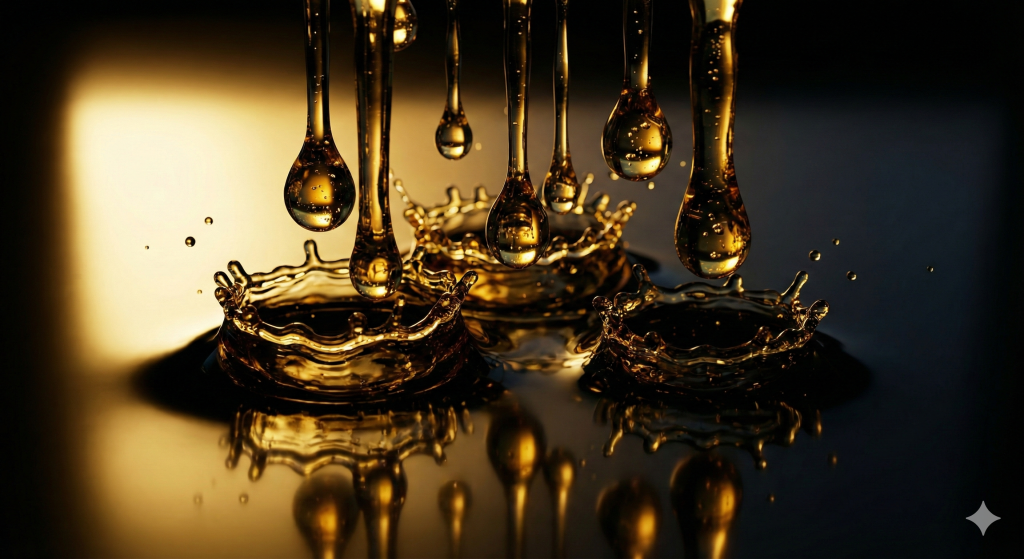
Fixatives are materials that slow down the evaporation of more volatile ingredients, allowing the fragrance to last longer and evolve more smoothly. They do not simply “make the perfume stronger”; they shape how it unfolds.
High-quality fixatives:
- Extend longevity without heaviness
- Preserve clarity in the dry-down
- Improve coherence between notes
Lower-quality alternatives may technically increase longevity, but often at the cost of elegance, creating flat or muddy bases.
For brands looking to create your own perfume brand with long-term credibility, fixative selection is a critical quality marker—even though it is never mentioned on the box.
Solvents: more than just alcohol
While ethanol is the most common solvent, its quality, purity, and interaction with the formula matter enormously. In professional perfume manufacturing, solvents influence:
- Initial impact on skin
- Diffusion radius
- Evaporation curve
- Skin feel
Cutting corners at this level may reduce costs, but it often results in fragrances that feel harsh at first spray or unstable over time.
Aromatic supports and modifiers
Some raw materials exist to smooth transitions, reduce sharpness, or enhance diffusion without contributing a recognizable note. These supports help create:
- A more fluid evolution
- Better balance between accords
- A refined overall texture
They are especially important in complex formulas, where multiple natural and synthetic ingredients must coexist without clashing.
Why this layer defines professional quality
When consumers say a perfume feels “well made” or “expensive”, they are often reacting to the effects of these invisible materials. Smoothness, balance, and persistence are not accidents—they are engineered.
Brands that invest in this structural layer are better positioned to scale, maintain consistency, and compete in demanding markets.
Fixatives, Solvents, and Aromatic Supports: The Hidden Structure of a Professional Formula
When brands decide to create your own perfume brand, attention usually goes to the visible part of the formula: the notes, the inspiration, the story. However, in professional perfume manufacturing, the real structure of a fragrance is built on materials that are rarely discussed outside the laboratory: fixatives, solvents, and aromatic supports.
These components do not exist to be recognized as individual notes. Their role is functional rather than expressive. Yet they are decisive in determining whether a perfume behaves like a professional product or like an unstable, short-lived composition.
A fragrance formula without a solid structural base may smell attractive at first, but it will struggle to perform consistently over time, across skins, climates, and production batches.
Fixatives: controlling evaporation and longevity
Fixatives are materials designed to slow down the evaporation of more volatile ingredients. Their function is not simply to “make the perfume last longer,” but to control how time unfolds within the formula.
In professional perfume manufacturing, fixatives help to:
- Anchor top and heart notes so they do not disappear abruptly
- Create a smoother transition toward the base
- Maintain coherence throughout the dry-down
High-quality fixatives work quietly. They do not dominate the composition or mask other materials. Instead, they stabilize the olfactory structure and allow the perfume to evolve in a controlled, intentional way.
Lower-quality fixatives, by contrast, often create heavy or flat bases. While they may technically increase longevity, they can reduce clarity, transparency, and refinement—qualities that are essential for brands aiming to create your own perfume brand positioned as premium or niche.
Solvents: much more than a neutral carrier
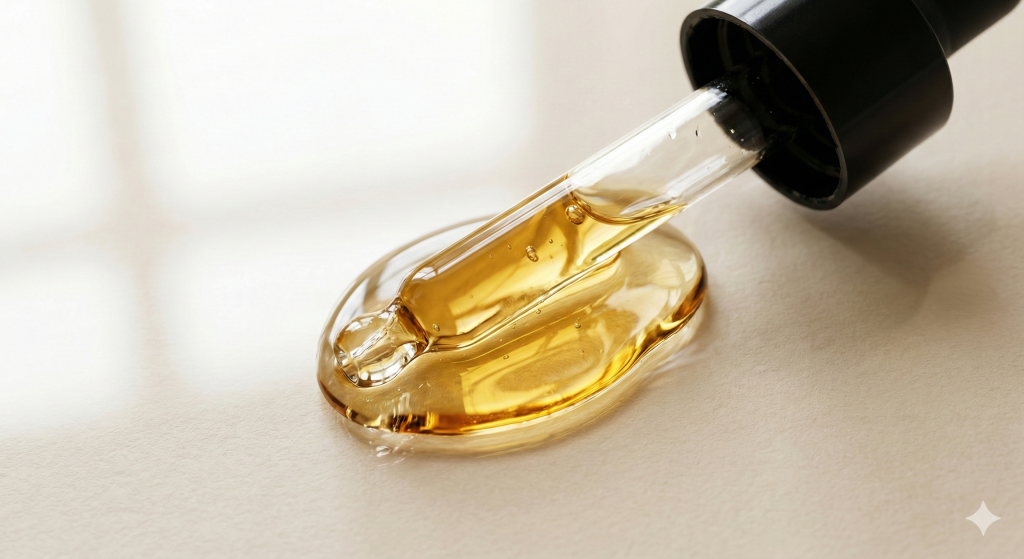
Solvents are often perceived as purely technical necessities, especially ethanol. In reality, solvent choice and quality play a major role in how a perfume behaves from the first spray to the final hours on skin.
In perfume manufacturing, solvents influence:
- The initial impact of the fragrance
- Diffusion and projection radius
- Evaporation speed
- Skin feel and perceived smoothness
A high-quality solvent allows the fragrance to open cleanly and evenly. A poor-quality one can create harsh openings, uneven diffusion, or instability over time.
For brands looking to create your own perfume brand, solvent quality is one of those invisible decisions that separates professional products from cost-driven formulations. Consumers may not identify the cause, but they perceive the result immediately.
Aromatic supports and technical modifiers
Beyond fixatives and solvents, most professional formulas include a layer of aromatic supports—materials whose purpose is to balance, smooth, and connect different parts of the composition.
These supports are used to:
- Reduce sharp edges between accords
- Improve blending between natural and synthetic materials
- Enhance diffusion without adding identifiable notes
- Stabilize complex formulas
They are particularly important in fragrances with rich structures or high ingredient counts, where interactions between materials can easily become unbalanced.
In perfume manufacturing, these supports are what allow complexity without chaos.
How These Materials Shape Stability and Fragrance Evolution
The influence of fixatives, solvents, and supports becomes fully apparent over time, not in the first minutes of evaluation. This is why they are often misunderstood or undervalued by new brands.
Stability as a design choice, not an accident
Stability refers to a perfume’s ability to remain consistent:
- Over months of storage
- Across temperature changes
- Between production batches
In professional perfume manufacturing, stability is engineered deliberately. Fixatives help prevent rapid degradation, solvents ensure homogeneity, and aromatic supports protect the internal balance of the formula.
When these elements are poorly selected or minimized for cost reasons, instability tends to appear later—often after the perfume has already been approved.
Evolution: guiding the fragrance through time
A well-made perfume is designed to evolve with intention. The opening, heart, and base are not isolated stages but parts of a continuous progression.
Invisible raw materials influence:
- How long top notes remain perceptible
- How smoothly the heart emerges
- How structured and coherent the base feels
Without proper structural support, perfumes often collapse too quickly, losing definition and character as they dry down.
For brands aiming to create your own perfume brand with long-term relevance, evolution is as important as immediate appeal.
Consistency across skins and contexts
Another critical function of these materials is performance consistency. Different skins, climates, and application methods can drastically alter how a fragrance behaves.
Professional perfume manufacturing uses structural materials to reduce extreme variations, ensuring that:
- The fragrance remains recognizable across users
- The core identity is preserved in different environments
- The perfume performs reliably in real-world conditions
This consistency is essential for building brand trust.
Why laboratories prioritize this layer
From the lab’s point of view, fixatives, solvents, and supports are not optional extras. They are the tools that transform an olfactory idea into a market-ready product.
Brands that understand and respect this layer are better equipped to scale, to maintain quality over time, and to position themselves credibly in competitive segments of the market.
Quality Differences That Are Not Perceived in the First Test
One of the most common mistakes brands make when they create your own perfume brand is assuming that the first evaluation of a fragrance is enough to judge its quality. The initial spray, the opening notes, and the first hour on skin often feel decisive. In reality, this first impression reveals very little about whether a perfume is technically well built or commercially sustainable.
Many of the most important quality differences in perfume manufacturing only become evident over time. They emerge after hours of wear, repeated use, storage, or scaling production. These differences are rarely dramatic, but they are decisive in how a brand is perceived in the long term.
Why first impressions are misleading
During an initial test, the nose is naturally drawn to:
- Brightness of the opening
- Recognizable notes
- Immediate pleasantness
What is not perceived at this stage includes:
- How quickly the fragrance loses definition
- Whether the structure collapses in the dry-down
- How stable the scent remains after weeks or months
- How consistent it feels across different skins
Invisible formulation decisions—especially around fixatives, solvents, and supports—do not reveal themselves instantly. Their function is progressive and cumulative.
The problem of “good enough” formulas
In early-stage brand development, there is often pressure to approve a formula once it reaches an acceptable level. The fragrance smells nice, fits the concept, and receives positive feedback in quick tests. At this point, many brands decide to move forward.
This is where long-term quality is most often compromised.
A perfume can be:
- Pleasing on day one
- Technically fragile over time
- Inconsistent once production scales
These weaknesses are not always detectable without extended evaluation. Yet once the product is launched, they directly affect brand credibility.
Wearability over time and repeated use
A fragrance is not experienced once. Consumers live with it. They wear it repeatedly, in different moods, climates, and contexts. Quality in perfume manufacturing is revealed in this repetition.
High-quality structural materials ensure that:
- The scent remains balanced after hours of wear
- No harsh or empty phases appear later
- The fragrance stays interesting without becoming tiring
Lower-quality formulas often feel increasingly flat or unrefined with repeated use, even if the opening is appealing.
Consistency as a silent quality signal
Consumers may not articulate why one perfume feels “better made” than another, but they sense consistency. When a fragrance smells the same:
- From bottle to bottle
- From one purchase to the next
- Across different seasons
trust is built subconsciously.
This consistency is not accidental. It is the result of professional perfume manufacturing decisions that prioritize stability, reproducibility, and control over time.

Impact of These Decisions on Cost and Final Brand Positioning
Invisible raw materials do not only affect technical performance—they have a direct impact on cost structure and brand positioning. For anyone looking to create your own perfume brand, understanding this relationship is essential.
Why invisible materials influence cost more than expected
Fixatives, high-purity solvents, stabilizers, and advanced aromatic supports often represent a significant part of the formula cost. Because they are not visible in marketing narratives, they are sometimes the first elements to be reduced when budgets are tight.
However, cutting costs at this level rarely leads to proportional savings. Instead, it often creates:
- Shorter product lifespan
- Higher risk of returns or reformulation
- Inconsistent batches
- Reduced perceived quality
In perfume manufacturing, cost decisions made at the structural level shape the entire economic logic of the product.
Entry-level vs premium positioning
Brands positioned at different levels make different structural choices.
An entry-level product may accept:
- Simpler fixative systems
- Faster evaporation
- Less complex evolution
A premium or niche brand, by contrast, is expected to deliver:
- Longevity without heaviness
- Smooth, controlled evolution
- High stability across time and markets
These expectations require investment in invisible quality. This is one of the clearest technical distinctions between mass-market and premium perfumes.
The false economy of short-term savings
Reducing costs by simplifying invisible materials may make sense on a spreadsheet, but it often increases long-term risk. Problems tend to appear later, when:
- The brand is already in the market
- Reputational damage is harder to control
- Reformulation is more expensive than doing it right initially
Brands that succeed in perfume manufacturing think in terms of lifecycle cost, not just initial investment.
Positioning is built into the formula
A brand’s positioning is not created only by storytelling or packaging. It is embedded in how the perfume behaves:
- How it lasts
- How it evolves
- How reliable it feels over time
Invisible raw materials are one of the strongest levers for reinforcing—or undermining—that positioning.
Conclusion: Quality Is Decided Where Consumers Don’t Look
When brands set out to create your own perfume brand, it is tempting to focus on what can be seen, named, and communicated. Yet the true quality of a perfume is built on decisions that remain invisible to the consumer.
Fixatives, solvents, stabilizers, and aromatic supports define how a fragrance lives over time. They determine whether it feels refined or rough, stable or fragile, professional or improvised. In perfume manufacturing, these choices separate short-lived products from brands that endure.
Consumers may not know why a perfume feels trustworthy, but they recognize the result. Consistency, elegance, and reliability are not accidents—they are engineered.
For brands that aim to build long-term value rather than quick launches, investing in invisible quality is not optional. It is the foundation on which credibility, positioning, and growth are built.A perfume does not prove its quality in the first spray.
It proves it over time.