
In today’s cosmetic market, the creation of a successful fragrance requires a precise methodological structure, in which experts in cosmetic chemistry, sensory evaluation, product development and international regulation collaborate.
The current perfume industry, undergoing constant transformation, displays extraordinarily sophisticated innovation models; each step of the process is supported by meticulous technical methods. Therefore, the role of a specialized perfumery laboratory is vital in transforming an initial concept into a successful, safe and highly competitive commercial product.
Why developing a professional fragrance is a delicate technical matter. Fragrance development demands a continuous dynamic between olfactory inspiration, rigorous chemistry, formulation engineering and compliance with current regulations. Each perfume that finally reaches commercialization is the result of many stages of research, meticulous analysis and validation, guaranteeing sensory quality and safety for the consumer.
From this perspective, the creation of perfumes must be understood as a multidisciplinary process, involving experts capable of discerning a creative concept and transforming it into a stable aromatic composition that complies with regulatory standards and aligns with the brand image.
The intricate nature of this process explains why, at an increasing pace, companies and entrepreneurs choose a specialized perfumery laboratory to carry out their initiatives.
This harmony between creativity and science is particularly notable in the work carried out by laboratories specialized in fragrance creation. In these professional environments, olfactory research intertwines with quality control procedures, regulatory evaluation and industrial development, ensuring that each product complies with international regulations of the cosmetic industry.
The role of a specialized perfumery laboratory such as MS|PARFUM.
Within this landscape, the function of a perfumery laboratory, particularly MS|PARFUM, becomes crucial. MS|PARFUM stands as a leader in the field of fragrance development and perfume creation, providing comprehensive solutions that begin with the initial conceptualization and conclude with the preparation of the regulatory dossier necessary for product commercialization. The operating method of MS|PARFUM is based on a scientific methodology that combines olfactory design, technical development, manufacturing and compliance with current regulations. This operational model makes it possible to transform a creative idea into a fragrance fully prepared for global launch.
At MS|PARFUM, this procedure is implemented through a well-defined methodology, ensuring the connection between the creative idea, the technical composition and compliance with EU perfume regulations. In this way, the laboratory ensures that each fragrance creation project meets the quality requirements demanded by the global cosmetic industry.
Everything begins, even before the formula, with the definition of the olfactory concept. The strategic briefing of a fragrance is the starting point.
Before the aromatic formulation phase, it becomes imperative to precisely define the olfactory concept that will determine the essence of the perfume. This first step focuses on the preparation of a strategic briefing that allows the perfume laboratory to understand the objectives of the project and the characteristics of the product to be developed. During this phase, elements such as brand positioning, the demographic group targeted by the fragrance and the product category within the global market are studied.
This strategic analysis essentially serves as the foundation for the subsequent development of the entire fragrance process.
Brand positioning, ideal clientele and product type. Defining the aromatic concept is closely linked to the identity of the brand promoting the project. The perfume must reflect the aesthetic, cultural and emotional values that define the company. For this reason, the perfumery laboratory collaborates very closely with the client to understand their strategic vision and translate it into a coherent aromatic expression.
Likewise, the analysis of the target audience is another indispensable element in the perfume development process. Factors such as age, lifestyle, cultural preferences and market trends have a substantial impact on the construction of the fragrance’s olfactory identity. Brand identity and olfactory narrative.
This perspective becomes especially relevant for companies aiming to build their own perfume brand, distinguishing themselves in an intensely competitive market. Positioning the perfume in the market.
The strategic alignment of the perfume also implies a thorough analysis of its position in the market. Various niches coexist in the perfume industry, including categories such as niche, luxury or mass premium. Each of these segments presents unique nuances that influence formulation, product design and commercial strategy. The role of the perfumery laboratory lies in adapting fragrance development to the expectations and standards of each segment, ensuring that the final product aligns with its competitive positioning.
Olfactory design: the real architecture of a perfume.
The work of the perfumer in a professional laboratory. Olfactory design is an extremely intricate phase within the perfume creation process. At this crucial moment, the perfumer strives to convert the previously defined olfactory concept into a harmonious and consistent aromatic composition. The creative aspect of the perfumer is based on translating emotions, memories and abstract ideas into precise combinations of aromatic molecules. This task requires a deep understanding of perfumery raw materials as well as extensive experience in formulation.
Selection of raw materials. The selection of ingredients strongly determines the quality of a perfume. Perfumery raw materials may have both natural and synthetic origins, each providing unique properties to the aromatic composition. In the field of fragrance development, the choice of raw materials is guided by factors such as chemical stability, compatibility with other components and compliance with international regulations on cosmetic safety.
Construction of the olfactory pyramid. Traditionally, the architecture of a perfume is structured through the olfactory pyramid. This conceptual model illustrates the temporal evolution of the fragrance. It is structured in three essential layers: top notes, heart notes and base notes.
Top notes provide the initial olfactory impression of the perfume, while heart notes define its central essence. Base notes, in contrast, add depth, durability and anchoring to the fragrance. Constructing the olfactory pyramid correctly is fundamental. It guarantees the sensory coherence of the perfume and ensures harmonious evolution upon contact with the skin.
Stability and sensory coherence.
A primary challenge when formulating perfumes is ensuring that the fragrance maintains its olfactory identity over time. Unstable formulas may undergo chemical modifications that are detrimental to the aroma.
For this reason, laboratories dedicated to fragrance development implement rigorous stability tests and sensory evaluation procedures to verify that the aromatic combination maintains its qualities regardless of storage or usage conditions.

A frequently underestimated stage: sampling and refinement of the formula.
Creation of the first samples. Once the fundamental structure of the fragrance has been defined, the perfume laboratory begins the phase of producing perfume samples. These preliminary versions of the formula allow evaluation of the real behavior of the aromatic mixture and make it possible to identify potential areas for improvement. The sampling process requires multiple iterations, during which the perfumer adjusts the proportion of components to optimize the perfume’s olfactory identity.
Technical adjustments in the perfume.
During this period, the technical team evaluates various parameters related to intensity, projection and longevity of the fragrance. These aspects directly influence the sensory experience of the user and the overall perception of the perfume.
Adjusting the formula is crucial in fragrance design, allowing the olfactory impact of the product to be maximized before final approval.
Client–brand evaluation.
The collaboration between the perfume studio and the client is essential at this stage of the process. Different perfume samples are presented in order to obtain valuable feedback that guides the final result according to the brand’s vision. This continuous exchange between the laboratory and the client accelerates decision-making and ensures that the finished fragrance faithfully reflects the olfactory concept defined at the beginning of the project.
When is a fragrance ready? A fragrance is considered finished after passing sensory and technical tests. The perfume achieves the desired aromatic balance and its formulation complies with the standards of stability, safety and quality established by the cosmetic industry.
Technical tests to determine perfume viability.
Perfume stability testing. Before manufacturing the product, tests to evaluate fragrance stability are essential. These analyses examine how the perfume behaves under temperature fluctuations, light exposure or prolonged storage.
The goal of these studies is to ensure that the perfume’s aroma remains unchanged throughout its useful life.
Packaging compatibility.
A crucial aspect in fragrance development is the compatibility between the perfume composition and its packaging system. Certain materials may react with aromatic components, altering their chemical structure or modifying their olfactory profile. For this reason, the perfumery laboratory performs specific tests to evaluate the interaction between the fragrance, the bottles and the spray mechanisms.
Quality control in professional perfumery. Quality control of perfumes represents an indispensable element in fragrance production.
Expert laboratories use meticulous protocols to confirm the uniformity of each production batch, ensuring that the finished product preserves the same sensory characteristics as the original formula.
These actions ensure product excellence and strengthen the client’s trust in the brand. A step often overlooked by entrepreneurs is the regulatory dossier.
European cosmetic product regulations.
Commercializing a perfume in Europe requires strict compliance with EU perfume regulations. This legislation establishes safety and documentation requirements that must be met by all cosmetics before their introduction to the market. Specialized laboratories such as MS|PARFUM play an essential role in this process, ensuring that each fragrance complies with the regulations established by current legislation.
Essential documentation for marketing a perfume.
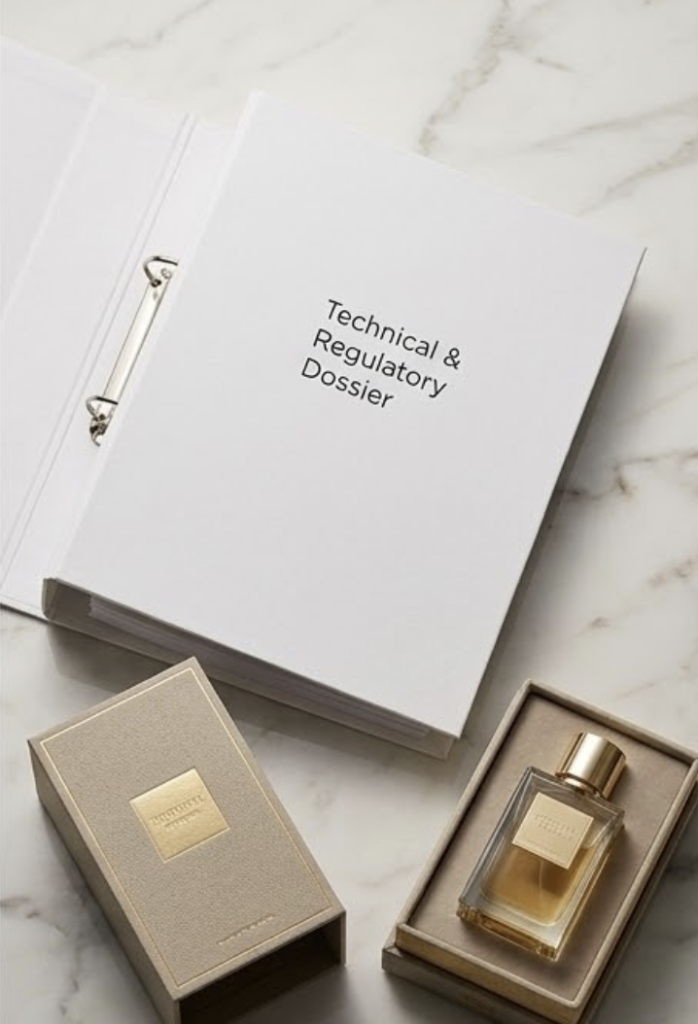
Among the key elements of the regulatory process stands the preparation of the cosmetic regulatory dossier. This document compiles all the technical information required to certify the product’s safety and compliance with European legislation.
The dossier gathers several key elements, including the safety report or safety assessment, the product information file PIF and the aromatic technical sheet.
Consumer safety is undoubtedly a fundamental pillar of the cosmetic industry. Therefore, every perfume requires a thorough toxicological evaluation that examines the safety profile of its components. This analysis also verifies compliance with the guidelines of the International Fragrance Association, ensuring that the formulation adheres to international safety standards in perfumery.
Perfume manufacturing: the moment when the formula becomes a commercial product.
This production stage, fundamental in the creation of a professional fragrance, marks a turning point. It is precisely here where the original laboratory concept becomes industrialized and transforms into a cosmetic product ready for distribution and sale. Turning the idea and technique into a tangible perfume requires strict procedures. These must be controlled processes with precise industrial methodologies that ensure the stability of the final product, faithful reproduction of the formula and compliance with international regulations. Today, within the cosmetic industry, proper perfume manufacturing is crucial. It must ensure that the fragrance, in its final form, preserves the olfactory identity conceived in the laboratory while guaranteeing the safety and quality required by current legislation.
In this context, the involvement of an expert entity such as MS|CLINICS becomes key in orchestrating the entire transition process from initial design to final production. Through its collaboration with perfumery laboratories such as MS|PARFUM, MS|CLINICS integrates the scientific foundations of cosmetic development with a global perspective that prioritizes technical excellence and regulatory compliance. In this way, the fragrance manufacturing process unfolds under a methodological framework that combines scientific research, industrial control and strategic product planning.
Production scaling from laboratory to industrial manufacturing.
Production scaling represents a crucial stage within the perfume production process. In the early stages of development, the aromatic formulation is conceived and evaluated in small quantities within the controlled environment of the laboratory. However, in order to commercialize the fragrance, it is essential to transfer the same formulation to an industrial production system capable of reproducing it accurately on a larger scale.
This process requires careful adaptation of the formulation, ensuring that the aromatic composition, with its chemical and sensory balance, remains stable even in large production volumes. Factors such as mixing temperature, agitation speed, ingredient compatibility and interaction between raw materials become critical at this stage.
In perfume development, the transition from laboratory to industrial production requires very precise technical protocols to guarantee fragrance stability and consistency in each manufactured batch. In this respect, the technical knowledge of specialized laboratories such as MS|PARFUM is fundamental in ensuring faithful reproduction of the original formula in industrial-scale perfume production systems.
For companies and entrepreneurs who aspire to create their own fragrance, collaboration with a laboratory specialized in private label perfume represents a strategic solution. It allows a conceptual idea to be transformed into a real cosmetic product while preserving quality and regulatory compliance.
Through this production framework, MS|CLINICS has the ability to combine scientific research with refined industrial processes, ensuring the technical mastery of the finished product.
Mixing and maceration processes.
Once the production scale has been established, the stage of mixing the aromatic elements that form the fragrance begins. This process essentially integrates the various aromatic raw materials with alcohol and other additives necessary to obtain the final perfumed solution.
Correct execution of this stage is critical to ensure that the chemical structure of the perfume remains identical to the formula developed during the research phase. In perfume manufacturing, each ingredient must be added in exact proportions according to mixing protocols that guarantee the uniformity of the solution.
Within the framework of perfume development, maceration appears as a phase in which chemistry and sensory evaluation converge to refine the quality of the final product. Experienced laboratories such as MS|PARFUM use specific monitoring methodologies at this stage to ensure that the fragrance evolves as expected and maintains the olfactory coherence defined during the original creative process.
Filling, packaging and production control.
Once the maceration stage is completed, the perfume is ready for the filling and packaging process. This process consists of transferring the fragrance from production tanks into individual bottles that will constitute the final product.
Filling requires controlled environments where hygiene and safety are essential. Facilities dedicated to perfume production usually incorporate automated systems that accurately dose the volume into each bottle.
Certified manufacturing rooms are critical to preserving product quality. These spaces are designed to minimize contamination and ensure highly controlled operations.
Batch control is fundamental in perfume manufacturing. Each production batch is technically analyzed to verify that the fragrance maintains its original olfactory and chemical profile. This guarantees consistency and ensures a uniform sensory experience for all consumers.
Within the collaboration between MS|CLINICS and expert laboratories such as MS|PARFUM, quality control is a central pillar of the production process.
The implementation of strict protocols results in a strong brand reputation and reinforces market confidence in the technical superiority of the product.
Certifications and manufacturing standards.
The cosmetic sector is governed by a set of global standards that regulate the creation of personal care products. Among these standards, Good Manufacturing Practices known as GMP and the international regulation ISO 22716 stand out, specifying requirements for the safe and controlled manufacture of cosmetic products.
Applying these quality systems is essential for any laboratory involved in perfume manufacturing or private label perfumery projects. GMP standards define specific procedures regarding personnel hygiene, facility maintenance, ingredient traceability and quality control at each stage of production.
Within the framework of the work carried out by MS|CLINICS in synergy with MS|PARFUM, the adoption of these standards represents a commitment to scientific and technical quality. The incorporation of GMP systems and international certifications in perfume manufacturing processes ensures that each fragrance produced meets the highest standards of industrial excellence.
Packaging and brand experience.
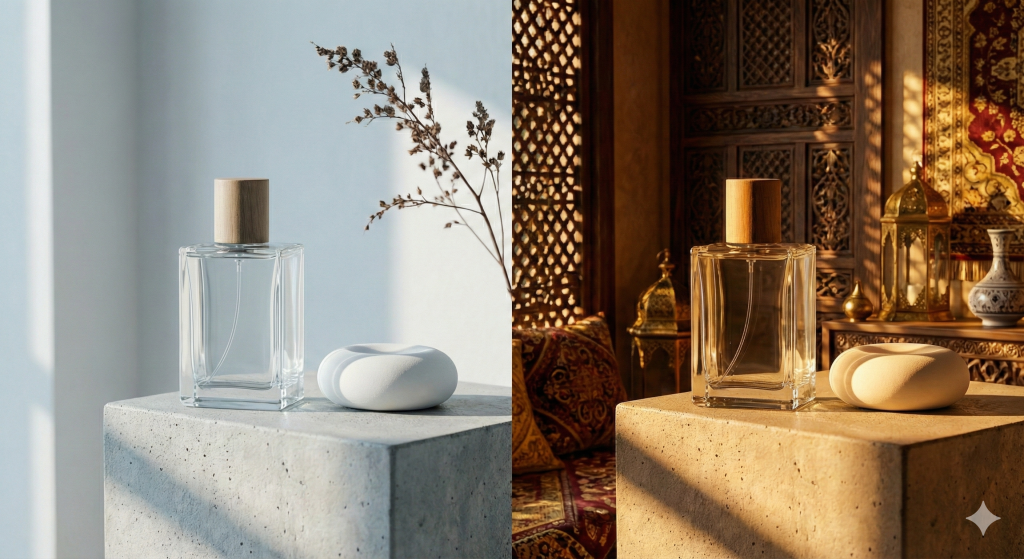
Packaging represents a central element within modern perfumery since it not only fulfills a protective role but also functions as a means of aesthetic and emotional communication. In fragrance design, perfume packaging is conceived as a tangible extension of the olfactory concept that defines the product’s identity.
Bottle design as a projection of the olfactory concept.
Bottle design represents one of the most visible manifestations of a perfume’s creative universe.
Through its shapes and finishes, the bottle conveys to the consumer the very essence of the fragrance, creating an immediate connection with the brand identity. Perfume design requires deep collaboration between perfumers, industrial designers and branding experts who jointly seek to translate the olfactory concept into a complete visual experience. In this process, the bottle becomes an object of strong symbolic value, encapsulating the spirit of the fragrance.
Strategic function of packaging in perfumery.
Beyond simple aesthetics, perfume packaging plays a strategic role in positioning the product within the market. The design of the packaging directly influences the perception of value that consumers associate with the product and can determine the commercial success of a fragrance.
A perfume brand that aims to stand out in such a competitive market must develop a visual language capable of communicating exclusivity, coherence and authenticity. In this context, packaging becomes a vital instrument that helps construct a strong and recognizable brand narrative.
Coordination of branding, design and formulation.
The success of a perfume is largely based on the harmonious fusion of its key components. The olfactory essence, packaging design and brand strategy must come together under a coherent global vision.
The collaboration between MS|CLINICS and specialized laboratories such as MS|PARFUM makes it possible to orchestrate this integration strategically, ensuring that perfume design, technical development and perfume brand positioning respond to the same conceptual logic.
Perfume launch: when the fragrance reaches the market.
Preparation for the first production.
Launching a new fragrance requires careful planning to ensure product availability at the right moment. Preparation for the initial production involves coordinating private label perfume manufacturing with marketing, distribution and brand communication schedules. This process includes the production of the first commercial batches, supervision of the logistics chain and preparation of product presentation materials.
Perfume brand launch strategy.
The strategy designed for launching a perfume brand requires consideration of several key dimensions including brand narrative, positioning strategy and the careful selection of distribution channels. The debut of a fragrance represents a crucial opportunity to strengthen brand identity and establish an emotional connection with consumers.
Within this framework, the technical expertise of MS|CLINICS and the development capabilities of MS|PARFUM contribute to structuring perfumery projects based on strong scientific foundations and a coherent commercial strategy.
Product distribution and positioning.
The final stage of this process materializes with the introduction of the perfume into the market through established distribution channels. Product positioning depends on several critical factors such as brand identity, packaging design and, naturally, the intrinsic quality of the fragrance.
A well-executed distribution strategy makes it possible to maximize product visibility and consolidate its presence within the target market segment.
Why collaborating with a specialized laboratory redefines results.
Differences between generic manufacturers and specialized laboratories.
The difference between a generic manufacturer and a specialized perfume laboratory lies mainly in the technical complexity and scientific rigor of the creative process. While general manufacturers tend to offer standardized solutions, specialized laboratories focus on research and product customization.
The holistic approach of MS|PARFUM in fragrance development.
The working method of MS|PARFUM is based on a comprehensive approach combining olfactory research, scientific development and industrial manufacturing. This methodology allows the company to offer complete solutions to businesses that aim to develop perfume projects according to the highest standards of quality and safety.
Conclusion: a successful perfume is not just an idea but a process.
The creation of a successful fragrance relies on far more than a creative spark; it requires the meticulous integration of diverse scientific, technical and regulatory disciplines. Fragrance development, a true art, demands the combination of chemical knowledge, sensory sensitivity and industry experience capable of transforming an abstract idea into a safe, stable and commercially viable cosmetic product.
Throughout this journey, the collaboration between MS|CLINICS and MS|PARFUM establishes a model of innovation that encompasses every phase of development, from conceptual definition to perfume production. This comprehensive approach enables brands to access a technical ecosystem capable of transforming an idea into a tangible fragrance ready to compete in the highly competitive global perfumery market.